2026-10-02 · Dale Harper
Stopping Condensation in Creek County Metal Shops and Buildings
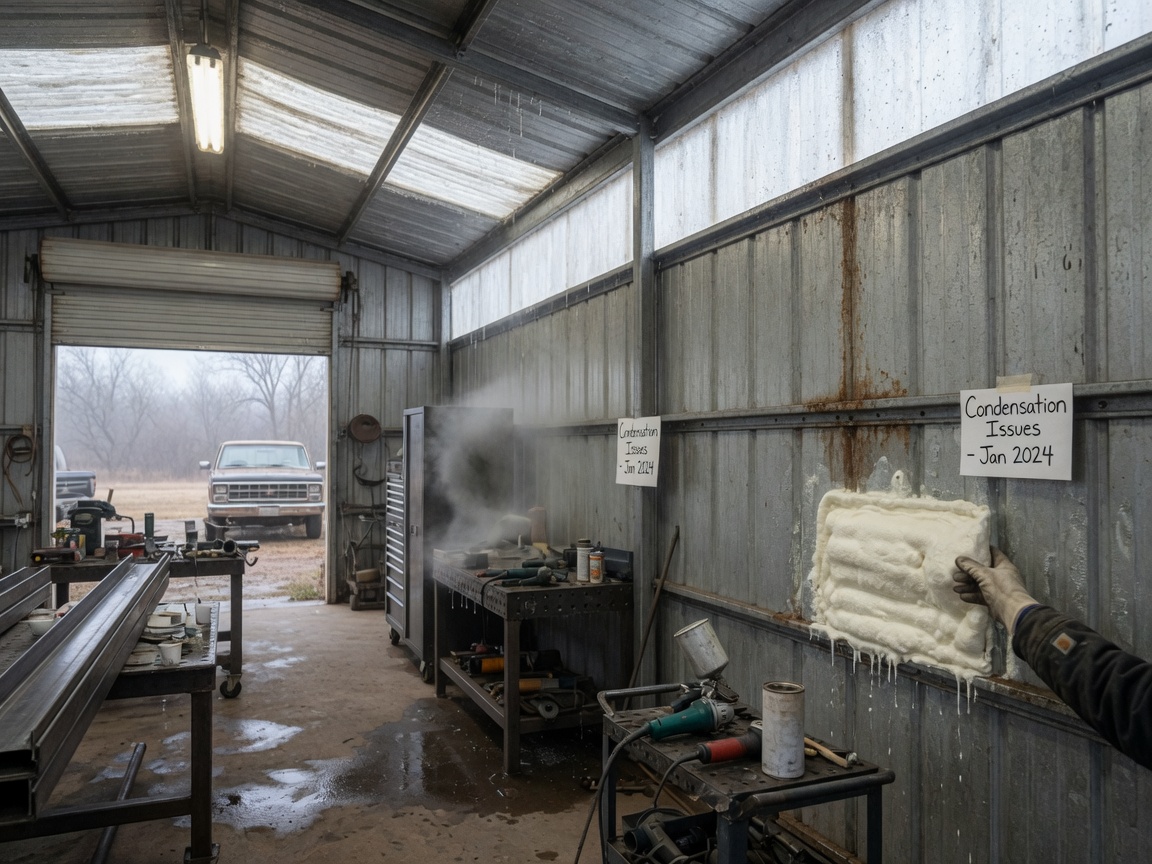
Closed-cell spray foam insulation stops condensation in Creek County metal shops and buildings when applied at a minimum 2-inch thickness to create an airtight vapor barrier that blocks warm moist air from reaching cooler metal surfaces during Sapulpa's humid subtropical summers.
Why Condensation Develops in Local Metal Structures
Metal shops in Sapulpa Heights, Kiefer, Oakhurst, and Kellyville sit in Creek County where hot humid air meets mild winter nights and rapid temperature drops near Sahoma Lake. These swings cause interior humidity to condense on uninsulated steel walls and roofs, especially in buildings constructed before modern vapor control standards. The same pattern appears in shops serving nearby Tulsa and Sand Springs traffic along Route 66 corridors. Without a sealed barrier, moisture drips onto equipment, promotes rust on framing, and raises energy costs for dehumidification. Closed-cell foam adheres directly to metal and expands to fill seams, eliminating the air pockets that allow condensation to start.
How Closed-Cell Foam Creates a Vapor Barrier
A 2-inch layer of closed-cell spray foam delivers an R-value near 13 while forming a Class II vapor retarder that limits moisture drive through the building envelope. In metal buildings common to the area, installers first clean the steel and apply the foam from the interior side, covering walls, roof deck, and any girts in one continuous pass. This method works better than fiberglass batts because it bonds to the metal and stops air movement rather than trapping pockets of humid air. Property owners in Jenks and Glenpool who have switched report drier floors and reduced corrosion on stored machinery after the first summer season.
Application Steps for Creek County Shops
- Inspect the metal surfaces for existing rust and clean loose scale.
- Protect electrical boxes and penetrations before spraying.
- Apply closed-cell foam in 1-inch lifts until reaching the target thickness.
- Trim any overspray and verify a continuous seal at all joints.
- Allow 24 hours cure time before returning equipment to service.
These steps account for the high summer humidity that can slow cure times and the mild winters that still produce morning dew on uninsulated roofs. Shops near the Route 66 Interpretive Center often request the work during shoulder seasons to avoid peak heat.
Long-Term Performance in Humid Subtropical Conditions
Once installed, the foam maintains its vapor-blocking properties for the life of the building when left undisturbed. Owners in Kellyville and Mounds have seen reduced HVAC runtime because the barrier keeps interior humidity stable even when outside temperatures swing 30 degrees in a single day. Unlike open-cell products, closed-cell foam adds structural rigidity to older metal frames common along older industrial corridors between Sapulpa and Bristow. Routine visual checks every few years confirm the seal remains intact after minor roof traffic or new penetrations.
For metal building projects, review our metal building insulation details. Readers considering roof upgrades may also find value in spray foam roofing options for Route 66 storefronts. An honest comparison of insulation choices appears in our pros and cons guide for Sapulpa homeowners.