2026-10-02 · Dale Harper
What Balloon Framing Means for Insulating Older Sapulpa Houses
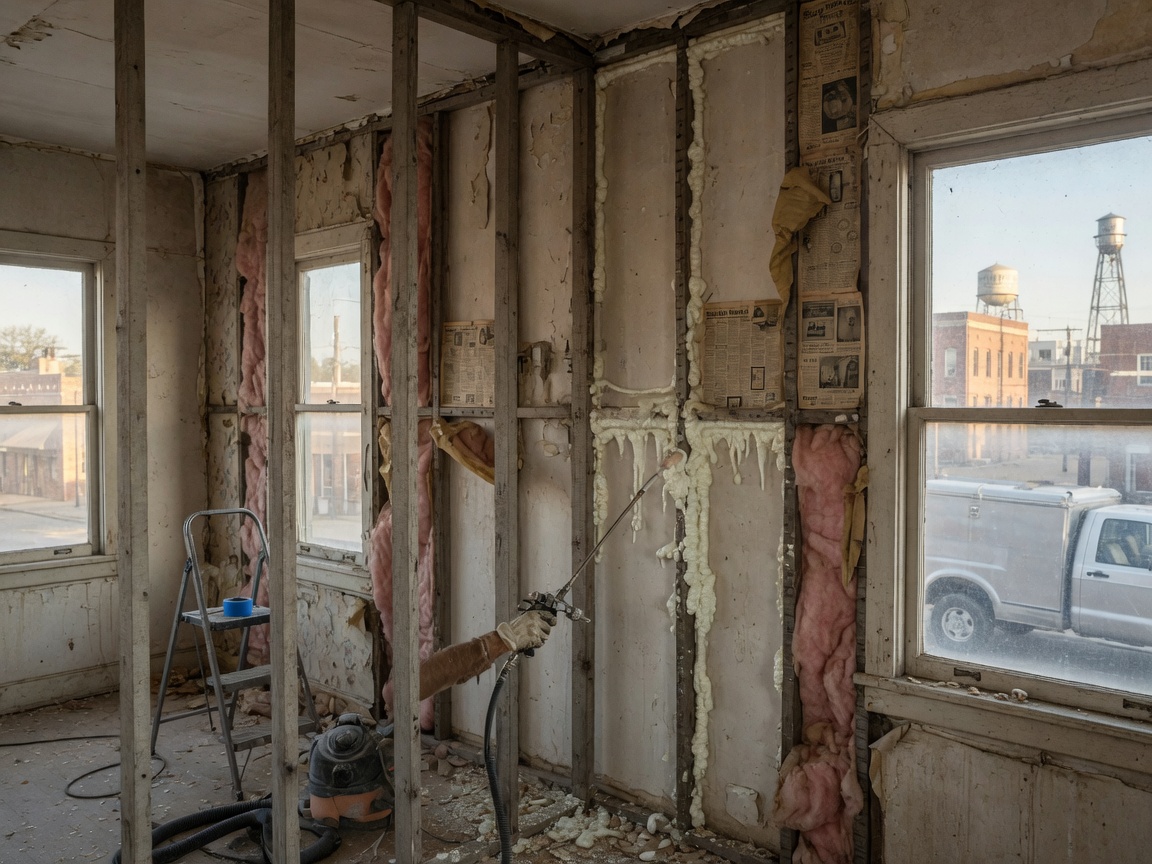
Balloon framing in older Sapulpa houses means studs run uninterrupted from the sill plate to the roofline, forming tall open cavities that spray foam can fill completely in one pass. This approach seals air leaks across multiple stories at once, though installers must add fire blocking at each floor level to meet current codes. The humid subtropical conditions in Creek County bring hot summers and mild winters that make these long cavities prone to both heat gain and condensation if left uninsulated.
Recognizing Balloon Framing in Sapulpa Housing Stock
Many homes built before the 1950s in Sapulpa Heights, Kiefer, and Oakhurst still rely on balloon framing because that method was standard when lumber was plentiful and labor was cheap. These structures typically feature single-story or two-story wood-frame houses with plaster or early drywall interiors and little original insulation. The continuous stud bays allow drafts to travel the full height of the wall, which becomes noticeable during summer humidity spikes or on the occasional cold winter night. Crews working in these neighborhoods often open small inspection holes at the top and bottom of each wall to confirm the framing type before drilling injection ports.
Moisture and Airflow Realities in Creek County
Creek County's humid subtropical climate drives warm moist air upward through balloon-framed walls during summer, where it can condense against cooler roof sheathing. Spray foam applied as a closed-cell layer inside those cavities stops that movement and adds a vapor retarder at the same time. In winter the same cavities can pull cold air from the crawl space or foundation, so the same foam layer also limits heat loss. Homeowners in Kellyville and near Sahoma Lake see the biggest comfort gains because those areas sit on slightly lower ground that holds more moisture year-round.
Spray Foam Application Steps for Tall Cavities
Technicians begin at the bottom of each stud bay and work upward, filling to a consistent depth that reaches the interior face of the exterior sheathing. Because the cavities can exceed 16 feet in height, they use extension wands and monitor pressure to avoid blowouts at mid-wall splices. Fire blocking must be installed or verified at every floor line before the foam sets; this step adds time but prevents hidden fire paths. After the walls are complete, the same crew often moves to the attic to seal the top plate area where balloon studs meet the roof structure.
For wall work the process pairs naturally with Wall Spray Foam Insulation on the same visit. Attic sealing at the top of the balloon cavities is handled through Attic Spray Foam Insulation to create a continuous thermal envelope. Readers who also need to address attached garages often review How Much Does It Cost to Spray Foam a Garage in Sapulpa? for comparable pricing details.