2026-10-02 · Dale Harper
Insulating a Historic Sapulpa Home Without Damaging Plaster Walls
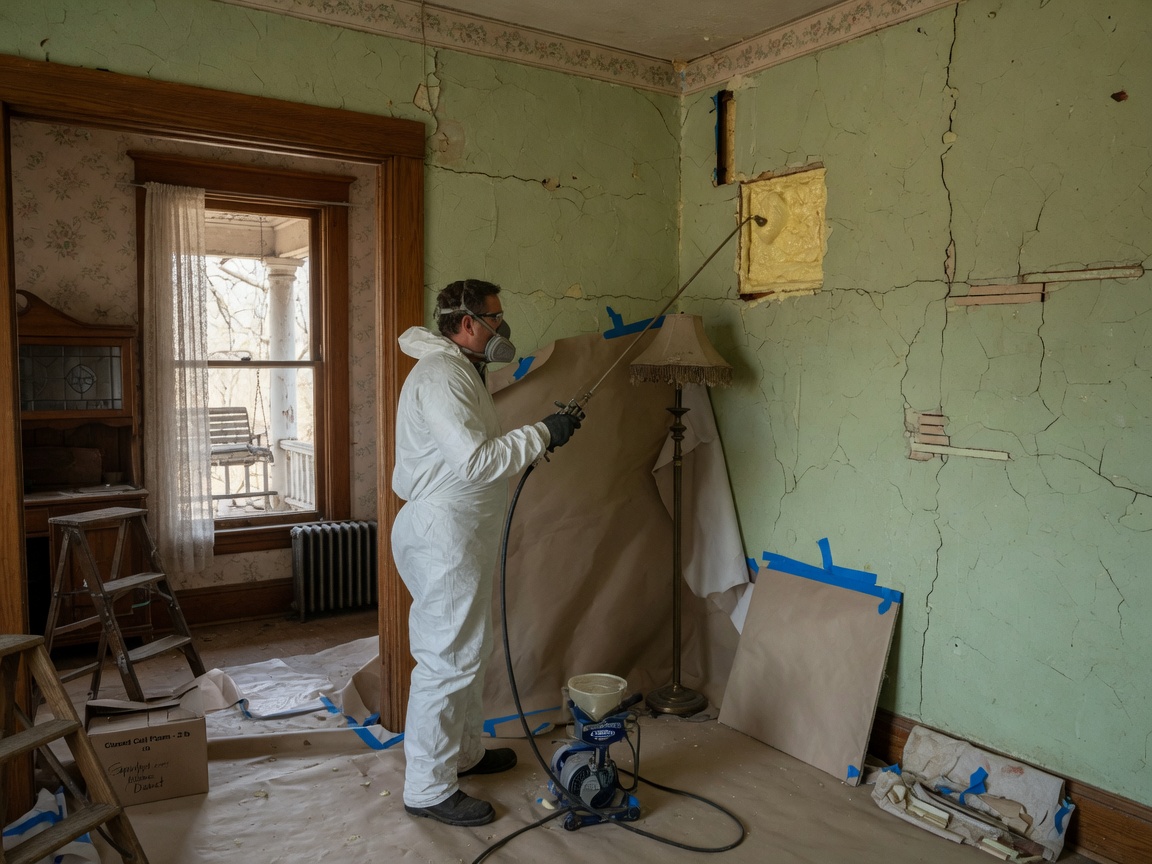
Closed-cell spray foam installs in historic Sapulpa homes through 1/2-inch injection holes drilled at stud centers, allowing material to fill cavities while leaving plaster surfaces intact for later patching with joint compound. This approach works because most pre-1950 homes in Creek County have empty wall bays that accept foam without requiring full interior demolition.
Evaluating Wall Cavities in Older Sapulpa Homes
Homes built before 1940 in Sapulpa Heights and along Route 66 often feature lath-and-plaster walls over 2x4 framing with irregular spacing. A moisture meter check reveals whether prior leaks near Sahoma Lake have left damp cavities that must dry before foam application. In neighborhoods like Oakhurst and Kellyville, many structures sit on pier-and-beam foundations where air movement carries humidity from the humid subtropical summers into wall spaces. Technicians probe each bay with a borescope to confirm no active rot or knob-and-tube wiring remains. This inspection prevents trapped moisture that could degrade plaster over time. Properties near Tulsa and Sand Springs share similar stock, so the same cavity mapping applies when crews cross into those areas.
Injection Techniques to Protect Plaster
Technicians drill access holes from the exterior siding or through baseboards rather than the finished plaster face whenever possible. Low-pressure closed-cell foam is then injected in lifts no thicker than 2 inches to control expansion pressure against the lath. In tight bays common to Jenks-adjacent historic homes, multiple small ports spaced 16 inches apart keep the material from bowing fragile plaster. After filling, holes receive wooden plugs or mesh patches before skim-coating. This sequence limits visible disruption to dime-sized spots that blend during repainting. Crews based at 1216 10th St, Sapulpa, OK 74066 follow the same protocol on jobs in Kiefer and Mounds to maintain consistent results across Creek County.
Post-Installation Finishing and Maintenance
Once foam cures, joints receive setting-type compound in two thin coats, sanded flush with surrounding plaster. Homeowners in Kellyville report that matching the original texture takes one additional visit rather than full wall resurfacing. Because the closed-cell material adds structural rigidity, it reduces seasonal movement that previously cracked plaster during mild winters and hot summers. Annual checks at the address listed above confirm no new cracks form at injection sites. For rim areas that remain uninsulated, readers often continue to Rim Joist Insulation: The Cheapest Big Comfort Upgrade for Sapulpa Homes to address the next most common leak path.
Long-Term Performance in Local Climate Conditions
Sapulpa’s humid subtropical pattern brings high summer dew points that closed-cell foam counters by creating an air and vapor barrier inside the wall. This reduces condensation risk on plaster during temperature swings between 95-degree afternoons and 30-degree winter nights. Homes in Glenpool and Bristow that received the same treatment show stable interior humidity levels year-round without added mechanical ventilation. The foam maintains R-value without settling, unlike cellulose that can compact in these older cavities. When walls connect to attics or crawl spaces, crews often pair the work with Wall Spray Foam Insulation on remaining surfaces to create continuous thermal control without altering historic exterior appearances.