2026-10-02 · Dale Harper
Spray Foam Insulation Pros and Cons: An Honest Look for Sapulpa Homeowners
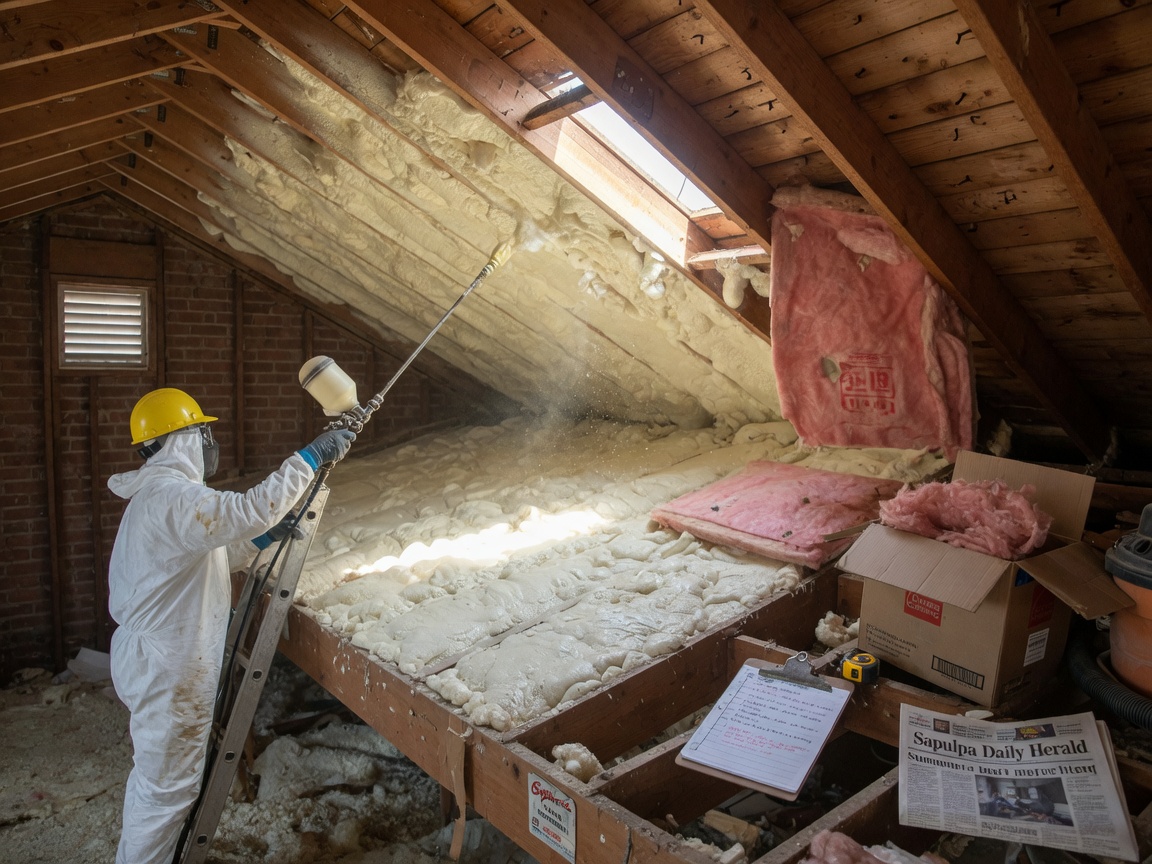
Spray foam insulation provides excellent air sealing and long-term energy savings for Sapulpa homes yet requires higher upfront investment and careful installation in older properties. In Creek County, where many houses date back decades and face hot summers with mild winters, the material reduces heat gain and humidity infiltration effectively. Homeowners in neighborhoods like Sapulpa Heights and Kiefer often see noticeable comfort improvements, though the decision hinges on specific house conditions rather than blanket recommendations.
Upfront Costs Versus Lifetime Performance
Initial pricing for spray foam typically runs $1.50–$3.00 per board foot installed, depending on whether open-cell or closed-cell material is chosen and the access difficulty in attics or walls. Over 20–30 years this investment often pays off through reduced HVAC runtime during Sapulpa's humid summers when temperatures push past 95°F. Closed-cell foam also adds structural rigidity and blocks moisture that can enter through foundations near Sahoma Lake. In contrast, fiberglass batts cost far less initially but allow more air movement, leading to higher summer cooling loads in Creek County homes. The real trade-off appears in older stock where balloon framing creates hidden voids that spray foam fills completely, unlike loose-fill options that settle over time.
Climate Fit in Humid Subtropical Conditions
Sapulpa's humid subtropical weather brings heavy summer moisture alongside mild winters that rarely drop below freezing for long. Closed-cell spray foam excels here by creating a vapor barrier that prevents condensation inside walls during humid months, something open-cell foam does not achieve as reliably. Residents near Route 66 or the Sapulpa Historical Museum report steadier indoor humidity levels after installation because the foam seals gaps that let outside air leak in year-round. However, the same tight seal means any moisture trapped during installation or from roof leaks stays put, raising mold risk if ventilation is ignored. Mild winters reduce the need for extreme R-value but still reward the air-sealing benefit when cold fronts move through from Tulsa.
Challenges With Older Housing Stock
Many Sapulpa homes built before 1960 feature balloon framing that allows fire spread and drafts, making spray foam a logical upgrade yet one that demands thorough prep work. What Balloon Framing Means for Insulating Older Sapulpa Houses explains how these cavities must be addressed without trapping hidden moisture. Rim joist areas in crawl spaces also benefit from targeted foam application, as detailed in Rim Joist Insulation: The Cheapest Big Comfort Upgrade for Sapulpa Homes. Removal proves difficult and expensive if future renovations require access, unlike batt insulation that can be pulled out easily. Homes in Oakhurst and Kellyville often need extra attention to wiring and plumbing penetrations before foaming begins.
Installation Realities for Local Properties
Professional crews working out of addresses like 1216 10th St in Sapulpa handle the chemical mixing and pressure settings that determine foam density and adhesion. Proper ventilation during application protects occupants, and the process typically takes one to three days depending on square footage in attics or garages. Metal buildings common on the edges of Sand Springs and Jenks require different surface prep than wood-frame houses to avoid delamination. Homeowners should inspect the cured foam for uniform coverage rather than relying on verbal assurances alone. Linking to Attic Spray Foam Insulation helps clarify how attic applications differ from wall or crawl space work in the same climate.